8D (Eight Disciplines) is a structured, team-based methodology for identifying, correcting, and eliminating recurring quality problems by determining and verifying true root causes rather than treating symptoms.
This guide is written for quality engineers, quality managers, and continuous improvement leads working in automotive, aerospace/defense, and other regulated manufacturing environments, where AS9100D, IATF 16949, and customer-specific corrective action requirements make 8D a fixture of supplier audits. We'll walk through what 8D actually is, why regulators and OEMs lean on it so heavily, exactly what should happen inside each discipline, and where the process most commonly breaks down.
Key Takeaways
- 8D is a documentation and project-management framework, not a root cause technique itself
- Discipline 4 (root cause verification) and Discipline 7 (preventive action) are the two most frequently skipped or underdeveloped steps
- IATF 16949 and aerospace supply chains routinely mandate or expect 8D-style corrective action
- Reserve full 8D for complex problems—forcing it on every minor issue wastes rigor
What Is 8D Problem Solving?
Ford developed the Eight Disciplines methodology, also known as Team-Oriented Problem Solving (TOPS), in 1987 to drive permanent corrective action through verified root cause elimination—not quick fixes.
ASQ defines 8D as a tool for identifying, correcting, and removing recurring production issues. That definition still holds because teams under pressure default to symptom-level fixes unless a structure forces them further.
The outcome 8D is built for is specific: a documented, verified, preventive resolution that satisfies both the customer and the internal quality system—not a signed-off form.
8D is often confused with frameworks it actually complements:
| Framework | What it actually is |
|---|---|
| CAPA | The broader corrective/preventive action requirement that 8D frequently fulfills |
| A3 | A one-page Toyota-style format for recording problem, analysis, and countermeasures |
| DMAIC | Six Sigma's five-phase cycle for improving an existing underperforming process |
These don't compete with 8D. CAPA is the regulatory expectation; 8D is a common way to meet it with a documented, sequential investigation trail when a recurring or customer-visible issue needs full root-cause treatment.
Why 8D Is Used in Regulated and Manufacturing Industries
Automotive and aerospace supply chains didn't adopt 8D by accident. IATF 16949's clause 10.2.3 requires a documented problem-solving process covering containment, root cause analysis, systemic corrective action, and effectiveness verification.
The clause doesn't name 8D specifically, but many OEM customer-specific requirements do. Volvo Group's 2025 IATF CSR lists 8D as the mandatory method for quality issues, and Ford's CSR references it directly within its FMEA update requirements.
What these audit environments actually demand:
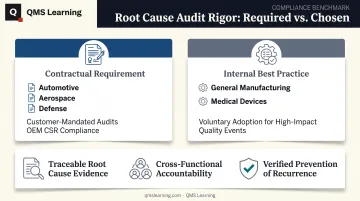
- Traceable evidence of a real root cause investigation, not an assumed one
- Cross-functional accountability across engineering, quality, and operations
- Demonstrable prevention of recurrence, verified with data
Without a structured process, teams jump straight to a fix. They address the symptom, close the ticket, and the same nonconformity resurfaces months later under a different failure mode—often flagged again by the original customer.
That recurrence risk is exactly why regulated industries formalize the method. 8D functions two ways in practice: as a contractual requirement in automotive, aerospace, and defense contracts, and as an internally adopted best practice for high-impact quality events in general manufacturing and medical devices, even where no customer mandates it.
Not every issue deserves a full 8D. Reserve it for:
- Customer complaints or repeat nonconformities
- Safety-related failures
- Situations where a customer or auditor specifically requests an 8D response
A simple corrective action record still covers everything else.
How the 8D Process Works (Conceptual Flow)
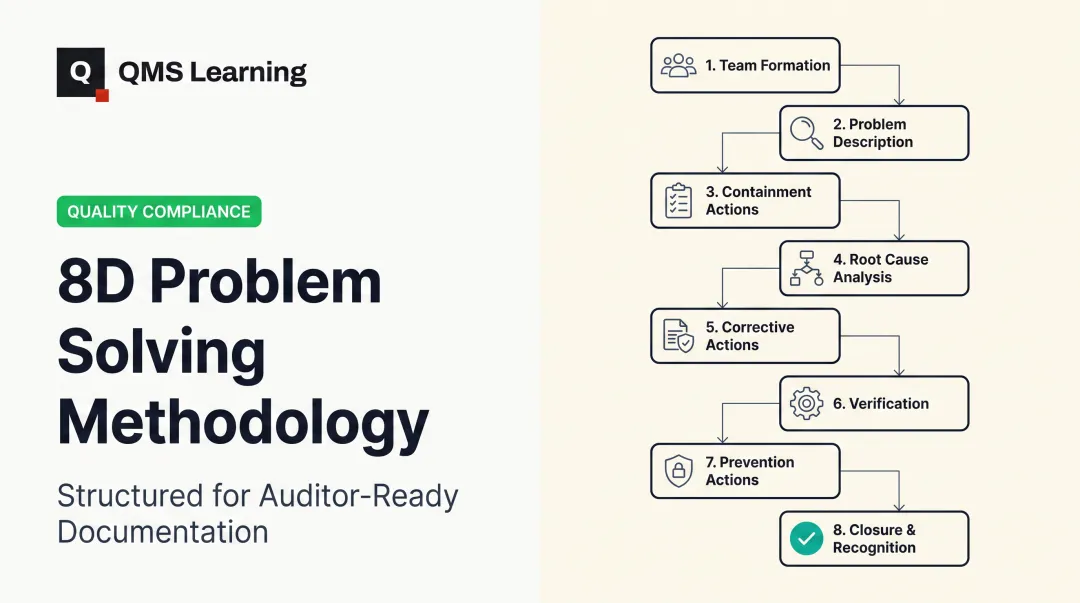
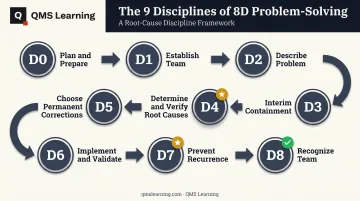
8D moves a team from a reported symptom to a verified permanent fix through nine sequential disciplines (D0 through D8), each producing a deliverable that feeds directly into the next.
What goes in: a documented problem symptom (complaint, nonconformance report, audit finding) plus supporting data, quantified using a structured framework such as 5W2H (who, what, where, when, why, how, how many).
The team then isolates true root causes using an actual technique, not a brainstorming session, and verifies each cause with evidence before proposing a fix. Interim containment protects the customer while that investigation runs, and validation gates confirm a fix works before anyone calls it permanent.
Done right, the nonconformity is eliminated at the source, procedures are updated so it can't recur, and the investigation becomes documented organizational knowledge.
D0: Plan and Prepare
The team documents initial symptoms, takes any emergency response actions needed to protect customers immediately, and makes a call: does this warrant a full 8D, or a simpler corrective action record? This gate matters more than teams give it credit for. Getting it wrong in either direction wastes resources or under-investigates a real risk.
D1: Establish the Team
Assemble a cross-functional team with direct product and process knowledge, not just whoever is available. Diverse expertise here directly affects whether the group finds the actual root cause or settles for the most convenient explanation.
D2: Describe the Problem
Using the 5W2H approach, the team defines the problem in quantifiable terms: what failed, where, when, how often, and how many units are affected. This becomes the shared problem statement every later discipline references back to.
D3: Develop Interim Containment Actions
Temporary measures isolate the problem from customers while the investigation continues. Containment effectiveness has to be verified with data, not assumed because it sounds reasonable on paper.
D4: Determine and Verify Root Causes
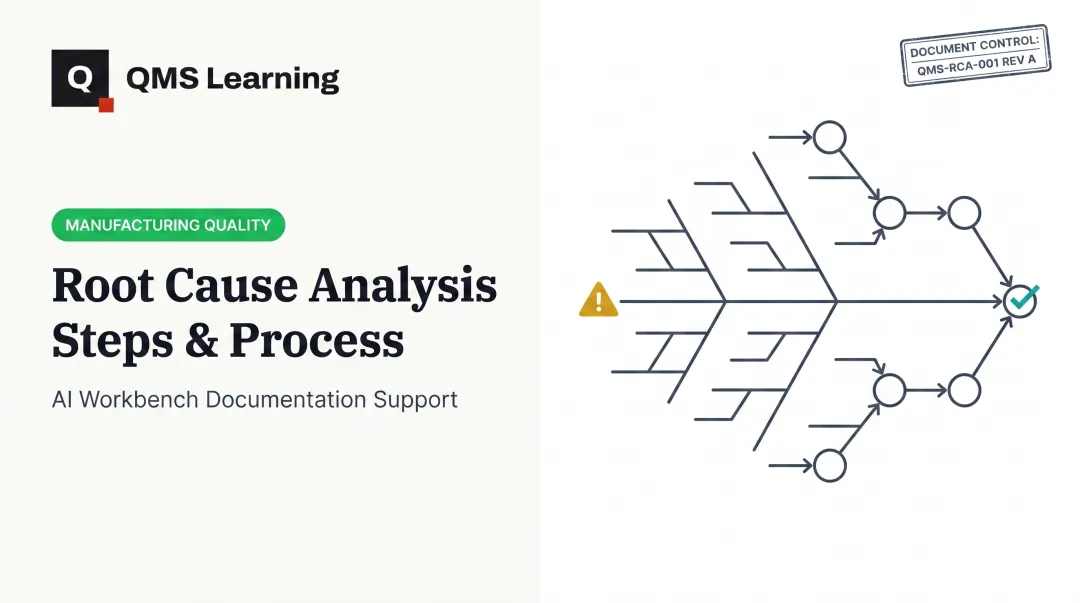
This is the most consequential step in the entire methodology, and the most frequently underdeveloped. 8D itself doesn't specify how to find root cause. It's a placeholder that assumes the team already knows an actual technique—5 Whys, a fishbone/Ishikawa diagram, or comparative IS/IS NOT analysis. The team must still verify the resulting cause with evidence before moving forward.
D5: Choose and Verify Permanent Corrections
Evaluate proposed corrective actions for feasibility, then confirm them quantitatively—often through pilot or pre-production testing. The goal is to prove they resolve the verified root cause, not merely sound plausible.
D6: Implement and Validate Corrective Actions
Roll out the chosen correction and measure its real-world effectiveness against the original problem data. This is where the team confirms, with numbers, that the issue is genuinely resolved.
D7: Prevent Recurrence
Update management systems, procedures, and similar products or processes elsewhere in the organization so the same root cause can't reproduce the failure somewhere else. This step is systemic by design, not local.
D8: Recognize the Team
Formally close the investigation, acknowledge the team's work, and document lessons learned for future reference. Skipping this step doesn't break compliance, but it does erode the habit of doing the previous eight properly next time.
Common Misconceptions and When 8D Falls Short
The most persistent misconception is treating 8D itself as a root cause analysis method. It isn't. 8D is a project-management and documentation framework for organizing an investigation. Discipline 4 is a placeholder that assumes the team already knows how to isolate root cause using an actual technique.
Treat it as self-sufficient, and here's what happens: teams produce a compliant-looking 8D report, an auditor accepts it, and the same failure mode reappears months later because what got documented as "root cause" was actually just a symptom one layer down.
The behavior driving this is common and understandable. Under-trained quality engineers know the 8D form cold, but haven't been trained on which root cause tool fits which problem type. So they default to whatever technique they're most comfortable with, regardless of fit.
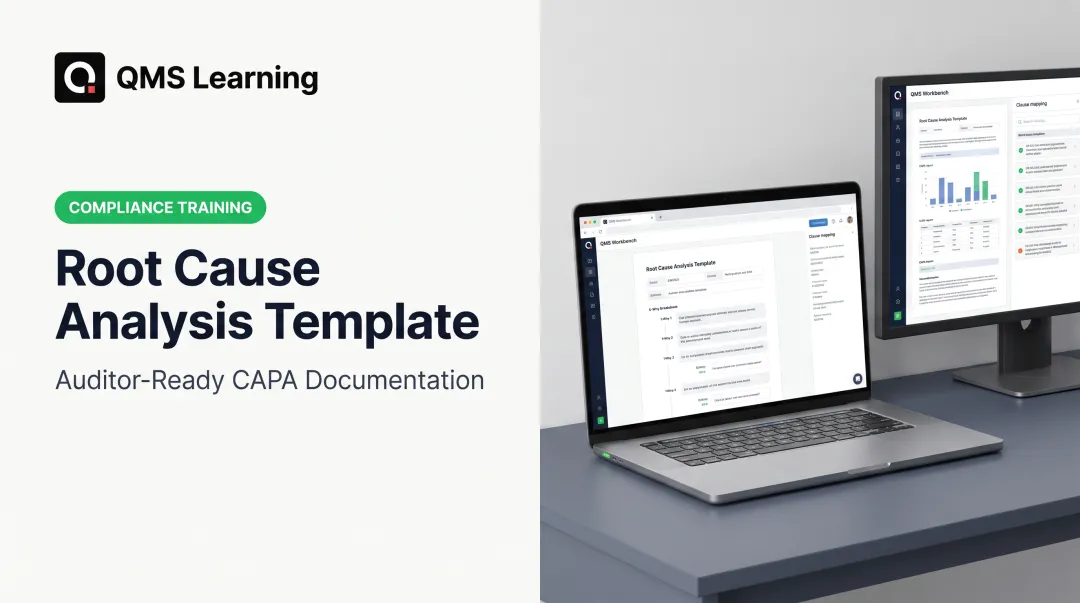
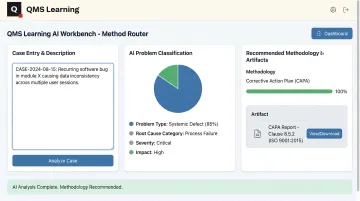
That gap is exactly what QMS Learning's AI Workbench and Method Router address. Instead of leaving tool selection to whoever is assigned, the Method Router diagnoses the problem type first, then recommends the methodology that fits:
- Isolated incident
- Supplier-driven defect
- Process gap
- Design issue
In one documented case, the same defect showed up on three separate jobs from one supplier in a single quarter. The Router classified it as systemic rather than isolated, selected 5-Why paired with Supplier CAPA, and generated a six-page artifact mapped to AS9100D §8.4.3 with the 5-Why analysis attached. That is the diagnostic judgment D4 assumes every engineer already has — built into the tool instead of left to chance.
Two other signals worth watching:
- 8D used by default, not by need. A simple, isolated, single-function failure with an obvious cause is better handled with a basic corrective action record. Forcing minor issues through all eight disciplines dilutes the rigor that D4 actually needs on the problems that matter.
- D7 skipped under schedule pressure. Teams fix the immediate occurrence and stop there, leaving the same latent risk sitting in similar products or processes elsewhere in the plant, waiting to resurface.
Conclusion
8D gives teams a disciplined path—team formation, containment, verified root cause, corrective action, and prevention—for complex or recurring quality problems. None of that structure matters if the substance inside each discipline is thin.
What happens inside root cause analysis matters more than filling out the report correctly. Audit acceptance and actual problem resolution are not the same thing. A report can pass review and still document a symptom dressed up as a root cause.
Organizations get the most from 8D when teams build real root cause judgment and evidence skills, not just familiarity with the form. That's the difference between a compliance exercise and genuine audit-ready capability. Structured practice—and tools that force verified causes before corrective action—is how that capability sticks.
Frequently Asked Questions
What is 8D in root cause analysis?
8D is a structured, team-based corrective action framework spanning nine disciplines (D0 through D8). Root cause analysis specifically happens at Discipline 4, using tools like 5 Whys or fishbone diagrams to isolate and verify the actual cause.
What are the 5 Whys in 8D?
The 5 Whys is an iterative questioning technique commonly applied at D4 to move from a stated symptom down to its true root cause. It's one of several tools available at that step, not a requirement.
What industries require or commonly use 8D problem solving?
Automotive teams use it under IATF 16949 and OEM customer-specific requirements. Aerospace and defense (including AS9100D-adjacent frameworks like AS13100), medical devices, and general manufacturing also use 8D regularly.
What is the difference between 8D and CAPA?
CAPA is the broader corrective and preventive action requirement found across most quality standards. 8D is a structured methodology teams often use specifically to fulfill CAPA's investigation and documentation expectations.
How long does a full 8D investigation typically take?
Timelines vary by complexity and customer requirements. Interim containment usually happens within 24 to 48 hours, while verified root cause and validated corrective action can take several weeks depending on data availability.
Is 8D mandatory under AS9100D or IATF 16949?
IATF 16949 expects a structured problem-solving process and many OEM customer-specific requirements explicitly name 8D. AS9100D expects documented root cause and corrective action without naming 8D specifically, though it's widely used to meet that expectation.