Introduction
A DMAIC project closes out clean. Charter signed, control plan filed, root cause "verified." Six months later, the same nonconformity resurfaces, and an auditor wants proof the fix actually held.
This scenario plays out constantly in regulated manufacturing, aerospace, and medical device shops. Templates give teams structure, but they don't tell anyone which tool — 5-Why, FMEA, or a Gap Analysis — actually fits the problem in front of them. That gap is where projects stall, or where teams call a consultant back in.
This guide breaks down the DMAIC templates and tools required at each phase, and what auditors actually expect to see. It also shows how AI-guided systems help compliance teams run root cause and CAPA work in-house, without handing that capability off to consultants.
Key Takeaways
- DMAIC templates improve existing processes; DMADV templates design new ones from scratch
- Each of the five phases has required deliverables that need sign-off before you advance
- Skipping measurement system validation, even with existing data, invites flawed conclusions later
- Filling out a template correctly doesn't guarantee an auditor will accept the output
- Customize any free DMAIC template to your regulatory framework : AS9100D, ISO 9001, or ISO 13485
What Is a DMAIC Template and Why It Matters
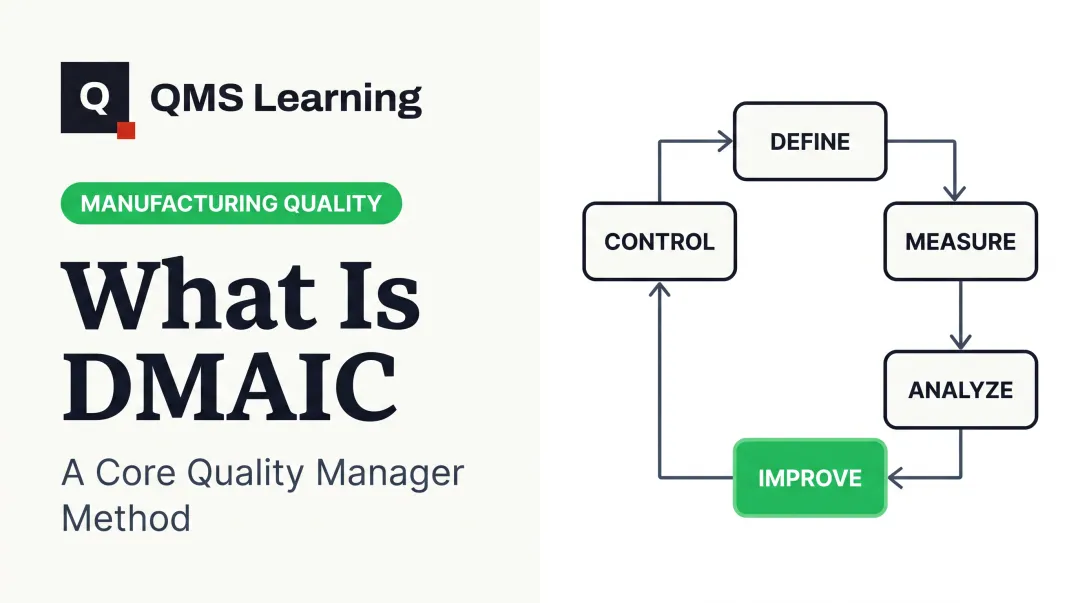
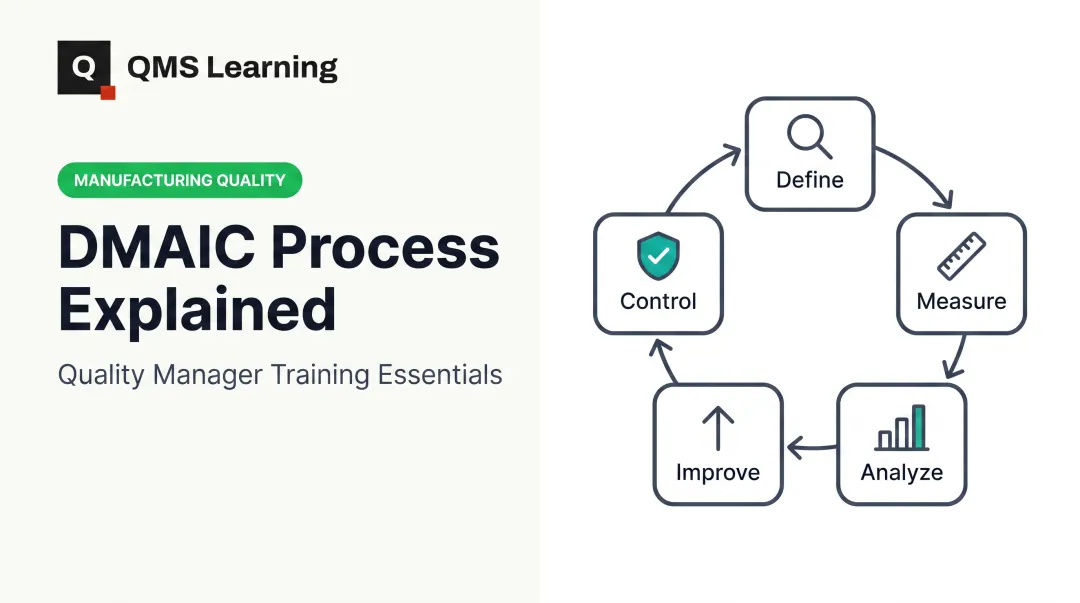
DMAIC stands for Define, Measure, Analyze, Improve, Control — the five-phase Six Sigma cycle for fixing an underperforming process. A DMAIC template turns that cycle into a repeatable, fill-in-the-blank workflow instead of a document someone rebuilds from memory every time a problem opens.
That consistency matters more than it sounds. According to iSixSigma's guidance on the Control phase, gains from improvement projects regularly erode after closeout when teams skip new standard work, ongoing monitoring, or a clear process-owner handoff. A control plan without an assigned owner is just a document nobody reads again.
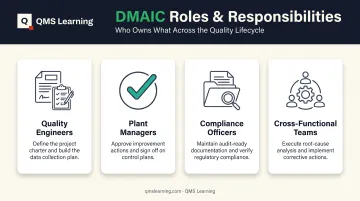
Who fills these out day to day?
- Quality engineers building the initial charter and data collection plan
- Plant managers approving scope and resourcing tollgates
- Compliance officers pulling completed templates as audit evidence
- Cross-functional teams closing corrective actions tied to a specific nonconformity
What counts after closeout is proof the fix held—and the template exists to capture that proof in a form auditors and process owners can reuse.
The 5 DMAIC Phases: Templates and Deliverables for Each Stage
Think of this as the "what to fill out, when" roadmap. Each phase has a required set of templates, and each one needs sign-off before the project can move forward.
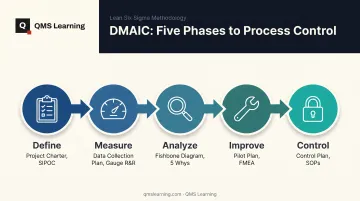
Define Phase
The goal here is quantifying the problem and locking scope before anyone reaches for a solution. Required templates:
- Project charter — problem statement, goal, scope, team, and timeline
- SIPOC diagram — suppliers, inputs, process, outputs, customers
- Voice of Customer inputs — translating complaints or CTQs into measurable requirements
- Stakeholder analysis — who owns the process, who approves the tollgate
Skip Define, and you get a team solving the wrong problem efficiently.
Measure Phase
This phase establishes a validated baseline, not just a spreadsheet of existing numbers. Required templates:
- Data collection plan — what to measure, how, when, and by whom
- Measurement System Analysis (Gage R&R) — confirming the measurement system itself is trustworthy
Here's the part teams get wrong most often: they assume historical data is trustworthy just because it exists. It isn't, not until the system that produced it has been validated. Skipping that step means every downstream conclusion in Analyze rests on numbers nobody actually checked.
Analyze Phase
Analyze shifts the question from "what's happening" to "why." The core root-cause tools that feed the root cause analysis report include:
- Fishbone (Ishikawa) diagram — mapping potential cause categories
- 5-Why template — drilling from symptom to root cause
- Pareto chart — ranking defects by frequency or impact
These tools work together, not in isolation. A Pareto chart tells you which defect to chase; the fishbone and 5-Why tell you why it is happening.
Improve Phase
This phase covers solution selection and risk mitigation before anything goes live. Required templates:
- Solution selection matrix — scoring options against cost, feasibility, and impact
- FMEA template — ranking failure modes by severity, occurrence, and detection
- Pilot implementation plan — testing the fix on a small scale before full rollout
Skipping the pilot is how a "fix" becomes a new nonconformity.
Control Phase
Control locks in the gains so the process does not slide back. Required templates:
- Control plan — named owner, monitoring frequency, and response plan for drift
- Updated SOPs — new standard work documented and released
- Project closure — formal handoff and tollgate sign-off
This phase is the one most often rushed. Once the metrics look good, teams move on without locking ownership and response triggers in place.
Top DMAIC Tools and Techniques Every Team Should Master
Templates are the form. Tools are what actually populate them correctly. Knowing when to reach for each one is the skill that separates a smooth project from a stalled one.
- SIPOC diagram — maps suppliers, inputs, process, outputs, and customers so the team shares process boundaries before diving into detail
- Fishbone (Ishikawa) diagram — groups causes across people, process, equipment, materials, and environment; validate each cause with data, not brainstorm alone
- 5-Why analysis — drills past symptoms to a verified root cause; most often misapplied when teams stop at the first plausible answer
- Pareto chart — ranks defect categories by frequency so teams attack the vital few causes first
- FMEA — scores failure modes by severity, occurrence, and detection; ASQ notes generic formats and thin data make scores unreliable
- Control charts / SPC — plots process data over time to separate routine variation from a real shift after the fix
None of these tools work well alone. A fishbone without Pareto ranking is just a long list of guesses; a 5-Why without data confirmation stops at a convenient story. Pair them in sequence, and pick the method that matches the problem—not the one the team used last time.
DMAIC vs. DMADV: Choosing the Right Framework
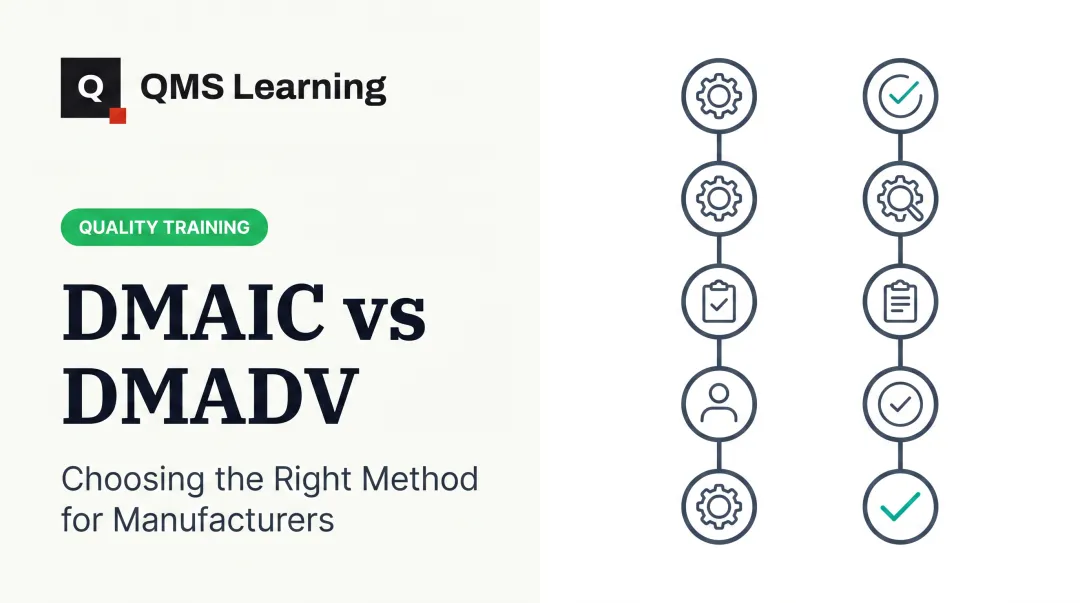
DMAIC improves an existing process that isn't meeting requirements. DMADV designs a new one from the ground up. Confusing the two wastes months.
| Situation | Framework |
|---|---|
| Reducing scrap rates on a live production line | DMAIC |
| Resolving a recurring nonconformity | DMAIC |
| Cutting inspection cycle time | DMAIC |
| Launching a brand-new inspection process | DMADV |
| Standing up a new ISO-compliant workflow | DMADV |
| Designing a new product line's quality plan | DMADV |
If the process already exists and is underperforming, reach for DMAIC. If nothing exists yet, DMADV is the right starting point. Trying to "improve" a process that was never designed properly just wastes a Measure phase.
From Static Templates to Audit-Ready Evidence
Here's the gap most template libraries never address: filling out a fishbone diagram or FMEA form correctly doesn't mean the team knew it was the right tool to reach for. It also doesn't mean the output will satisfy an auditor who's seen a hundred of these forms before.
QMS Learning built its AI Workbench around that exact problem. Instead of handing a team a blank template, the Workbench diagnoses the compliance issue first. Its Method Router then selects the right methodology from the 10 most common compliance plays, including:
- 5-Why Analysis
- FMEA
- CAPA
- Gap Analysis
- Root Cause Investigation
- Nonconformity Reporting
For example, when the same supplier defect showed up across three separate jobs, the Router selected 5-Why paired with Supplier CAPA, ruled out FMEA and Gap Analysis as the wrong fit, and generated the completed artifact automatically.
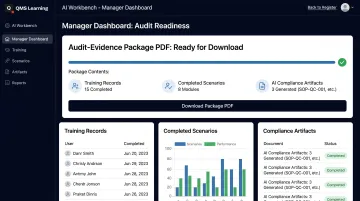
From there, the Manager Dashboard pulls training records, completed scenarios, and AI-generated artifacts into a single Audit-Evidence Package PDF. Teams compile audit evidence in minutes rather than days. That capability stays in-house instead of walking out the door with a consultant when the project ends.
Qualified quality teams can test the AI Workbench against a real open finding through a free 2-seat pilot before committing to a full rollout.
Frequently Asked Questions
What does DMAIC stand for?
DMAIC stands for Define, Measure, Analyze, Improve, and Control. It's the core Six Sigma framework for improving an existing process that isn't meeting performance or customer requirements.
Is DMAIC lean or Six Sigma?
DMAIC is a Six Sigma framework. Lean tools like value stream mapping are frequently blended into DMAIC projects, which is where the term "Lean Six Sigma" comes from.
What is DMAIC in Six Sigma with an example?
A rubber weather-strip manufacturer used DMAIC to cut rejection rates from 5.5% toward a 2% target. They analyzed defects driving 74% of rejections, revised work instructions and mold cleaning schedules, and locked gains with training. Results landed at 3.08% within three months.
What are the 5 steps of DMAIC?
Define the problem and scope; Measure current performance with validated data; Analyze root causes; Improve by piloting a fix; Control gains with a monitoring plan and named owner.
Can I skip the Measure phase if I already have data?
No. Existing data still needs its measurement system validated through Gage R&R before you can trust it for root cause analysis. Skipping this step risks building conclusions on numbers nobody confirmed were accurate.
How long does a typical DMAIC project take?
Standard projects often run several months, with Measure usually taking the longest for data collection and validation. Rapid workshop-style events can move faster, but those are typically a separate format—not a full DMAIC cycle.