Introduction
A fastener can look perfect. Right finish, right markings, right packaging. Then it fails under load six months into service, and the investigation traces back to a supplier nobody vetted properly.
That's the risk gap AS6174 was built to close. While most quality teams reach for AS5553 the moment "counterfeit parts" comes up, that standard only governs electronic components.
The raw material, castings, hardware, and fasteners that make up most of a typical aerospace supply chain fall under a different document entirely.
This guide covers what AS6174 actually is, its key definitions, its required program elements, and exactly how it fits alongside AS5553, AS6081, and AS9100 Clause 8.1.4. If your counterfeit-prevention procedure only mentions electronics, you likely have a coverage gap worth closing.
Key Takeaways
- AS6174 covers counterfeit non-electronic materiel (parts, assemblies, materials)—not electronic components.
- Focus areas: authenticity planning, trusted sourcing, inspection/testing, materiel control, and reporting.
- Scrutiny should scale with each part’s counterfeit risk, not a blanket policy.
- AS9100 Clause 8.1.4 never names AS6174, but registrars expect it to shape non-electronic procedures.
What Is AS6174?
AS6174 is an SAE Aerospace Standard titled "Counterfeit Materiel; Assuring Acquisition of Authentic and Conforming Materiel." The G-21 Counterfeit Materiel Committee develops and maintains it, and it exists to address a specific gap: counterfeit risk in parts and materials that have no electronic content.
The current published edition is AS6174B. According to SAE International's standards page, the B revision updates anti-counterfeit practices and clarifies authenticity planning, obsolescence handling, records, training, and procurement expectations. If your procedures still cite AS6174A, confirm whether that reference is deliberate or simply outdated.
Scope: What Counts as "Materiel"
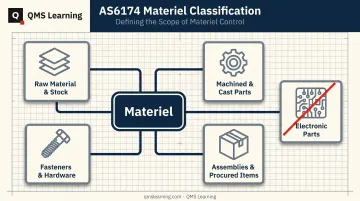
The standard defines materiel broadly:
- Raw material and stock
- Machined and cast parts
- Fasteners and hardware
- Assemblies and other procured items
Electronic parts are explicitly excluded — those fall under AS5553's jurisdiction instead.
Why the Standard Exists
Counterfeit and fraudulent materiel entering aerospace and defense supply chains creates real performance, reliability, and safety exposure. A substandard casting or an improperly heat-treated fastener doesn't announce itself; it just fails at the worst possible time.
That risk is why buyers and quality teams get measured against it. Any organization sourcing raw materials, hardware, castings, fasteners, or other non-electronic procured items in aerospace, defense, and adjacent regulated supply chains should expect its procedures to reflect AS6174's intent.
Key Definitions Under AS6174
Getting the terminology right matters, because auditors will test whether your procedure uses these terms correctly, not just whether it mentions them.
Materiel refers to material, parts, assemblies, and other procured items, excluding electronic parts. It's a deliberately broad umbrella term covering physical, non-electronic supply chain items.
Counterfeit materiel and fraudulent materiel are related but not identical:
- Fraudulent materiel is suspect material represented to the customer as meeting requirements when it may not.
- Counterfeit materiel is a confirmed subset: fraudulent material verified to be a copy, imitation, or unauthorized substitute represented as genuine, or altered without legal rights, with intent to mislead or deceive.
In other words, every counterfeit item is fraudulent, but not every fraudulent item is confirmed counterfeit.
How Non-Conforming Materiel Enters the Chain
Two pathways dominate:
- Product diversion: legitimate product gets pulled out of authorized distribution channels and resold outside approved routes.
- Product substitution: genuine product is swapped, in whole or part, with non-conforming material (for example, uncertified fasteners mixed into a certified titanium batch).
One related debate still open in industry: whether used parts represented as new count as counterfeit. The FY2012 National Defense Authorization Act (Section 818) pushed that inclusion for electronic parts, and standards such as AS5553 followed. AS6174's committee has wrestled with the same question for non-electronic materiel.
Whatever path non-conforming materiel takes, you still need proof of origin. Traceability under AS6174 is the documented supply-chain history of a materiel: every intermediary, transaction, and handoff from the original manufacturer through end use. Without it, you can't prove authenticity when it matters most.
What AS6174 Requires: The Core Program Elements
AS6174B organizes its requirements around five pillars, per SAE's description of the standard:
- Developing a materiel authenticity plan
- Procuring from reliable sources
- Assuring authenticity through commodity-appropriate certification, traceability, testing, and inspection
- Controlling materiel already identified as counterfeit
- Reporting suspect or confirmed counterfeit materiel
Most quality teams translate these five pillars into working buckets: product assurance, risk assessment, purchasing practices, traceability documentation, contractual obligations, and reporting.
Product Assurance in Practice
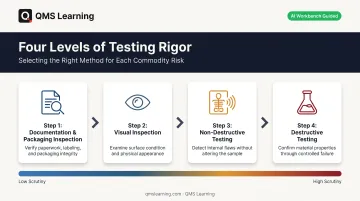
Commodity-appropriate testing and inspection typically draws on four techniques:
- Documentation and packaging inspection — checking certs, labels, and packaging for inconsistencies
- Visual inspection — examining surface finish, markings, and tolerances
- Non-destructive testing (NDT) — x-ray, ultrasonic, or dye penetrant methods that verify without damaging the part
- Destructive testing (DT) — material analysis when risk warrants sacrificing a sample
Scaling Scrutiny to Risk
Not every part needs the same level of scrutiny. A flight-critical structural bracket warrants far more inspection than a commodity spacer. The degree of traceability and testing should scale with the likelihood and consequence of a counterfeit item slipping through undetected.
Risk isn't limited to discontinued parts. ERAI's 2024 Annual Report found obsolete parts made up 42.75% of suspect-counterfeit reports.
Active components — readily available, long-lead-time, and unknown-lead-time combined — still accounted for 27.2%. Currently produced parts carry real risk too.
Purchasing and Reporting
On the sourcing side, AS6174 expects an authenticity assurance plan that prioritizes buying directly from original manufacturers or authorized/franchised distributors. Open-market purchases should trigger additional scrutiny as a standard control.
When suspect or confirmed counterfeit materiel turns up, the standard expects documentation and communication — internally at minimum, and to external clearinghouses or customer-designated channels when contractually required.
AS6174 vs. AS5553 vs. AS6081: Where Does It Fit?
Confusing these three standards is one of the most common scoping mistakes in counterfeit-prevention procedures.
| Standard | Covers | Typical User |
|---|---|---|
| AS5553 | Electrical, electronic, and electromechanical (EEE) parts | Organizations integrating EEE parts into products |
| AS6081 | Open-market EEE buys | Independent distributors and brokers |
| AS6174 | Non-electronic materiel (raw material, hardware, castings, fasteners) | Anyone sourcing non-electronic procured items |
AS5553 and AS6081 actually overlap somewhat: both deal with EEE parts, differing mainly by supply-chain role rather than commodity. AS6174 sits in its own lane, separated entirely by scope: no electronics involved.
If your operation does machining, fabrication, or coatings with zero electronic content, scoping your procedure around AS5553 alone leaves a gap. AS6174 is the document that actually applies.
Here's the part that trips people up: AS9100 Clause 8.1.4 doesn't name any of these standards. Registrar NQA reproduces the clause as requiring the organization to "plan, implement, and control processes... for the prevention of counterfeit or suspect counterfeit part use." No specific standard is prescribed.
That leaves organizations to select whichever standards fit their actual product mix. Suppliers handling both electronic and non-electronic parts should reference both AS5553 and AS6174 in a single procedure, not pick one and hope it covers everything.
Building a Right-Sized AS6174 Program
Turning AS6174's guidance into a working procedure comes down to a few concrete building blocks:
- A documented supplier approval list that prioritizes OEMs and authorized sources over open-market vendors
- Written criteria for extra scrutiny so any purchase from an unauthorized or open-market source automatically triggers additional inspection
- Receiving-inspection criteria specific to non-electronic counterfeit indicators, not a copy-pasted electronics checklist
The most common documentation gap auditors flag? A counterfeit-parts procedure that references AS5553 by name, covers electronic parts thoroughly, and then leaves raw material and hardware purchasing completely unaddressed against AS6174's intent. It's an easy gap to create and an easy one to miss internally.
Closing that gap takes people who understand the AS6174 and AS6081 detection workflow, not just the paperwork.
QMS Learning's Aerospace & Defense Audit-Ready pathway includes a Counterfeit Parts Avoidance course (six modules, 31 lessons) alongside AS9100D Internal Auditor and ITAR Compliance training. It covers supplier control, receiving-inspection workflows, and traceability documentation for both AS6174 and AS6081.
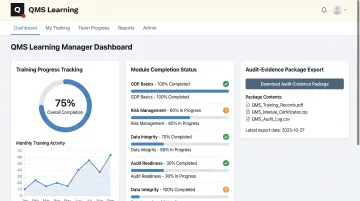
Teams typically reach audit readiness within 30 days of rollout. A Manager Dashboard tracks progress and exports training completion plus generated documentation as a single Audit-Evidence Package. Qualified teams can start with a free 2-seat pilot before a full license.
Frequently Asked Questions
What is AS6174 used for?
AS6174 is an SAE standard providing guidance for preventing counterfeit and fraudulent non-electronic materiel from entering aerospace and defense supply chains. It covers product assurance, risk management, and traceability for parts, hardware, and raw materials.
What is the difference between AS6174 and AS5553?
AS5553 covers counterfeit electrical, electronic, and electromechanical (EEE) parts. AS6174 covers non-electronic materiel like hardware, castings, and raw material. Organizations sourcing both types should reference both standards in their procedure.
Is AS6174 a certifiable standard?
AS6174 provides requirements and guidance, not a standalone certification scheme. AS9100-certified suppliers are expected to reflect its intent in their Clause 8.1.4 procedure for non-electronic parts.
What qualifies as "materiel" under AS6174?
Materiel means material, parts, assemblies, and other procured items, excluding electronic parts covered by AS5553. The term is deliberately broad and limited to non-electronic items.
Does AS9100 require compliance with AS6174?
Clause 8.1.4 requires a documented counterfeit-prevention process but doesn't name any specific standard. Suppliers handling non-electronic parts typically build their procedure around AS6174's guidance to satisfy that clause.
What's the difference between counterfeit and fraudulent materiel under AS6174?
Fraudulent materiel is suspect material represented as meeting requirements. Counterfeit materiel is fraudulent material confirmed as a copy or imitation represented as genuine. Counterfeit is a verified subset of fraudulent, not a synonym for it.